Mainland China's Top Premium Hotpot Brand Banu to Unveil Its First Store in Hong Kong
Banu, the top premium hotpot brand from mainland China, is poised to enter the Hong Kong market.
HONG KONG, July 22, 2026 /PRNewswire/ -- Banu's inaugural Hong Kong store is situated at Hysan Place in Causeway Bay's prime commercial district, scheduled to open in mid-November this year. As Banu's first foray outside mainland, the new store will not only bring the brand's product-centric philosophy to Hong Kong consumers, but also mark the official kickoff of its global expansion strategy.
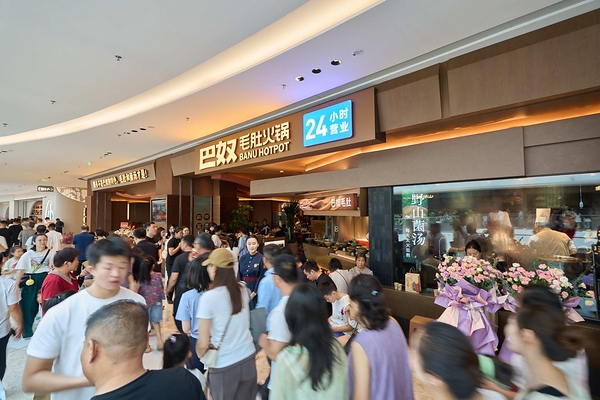
Banu store
Becoming the Top Premium Hotpot Brand by Prioritizing Product Quality Over Price and Service
While most hotpot brands are caught in homogeneous competition and clash head-on over service and value-for-money, Banu has been committed to a product-centric philosophy over its 25 years of development since being founded in 2001.
According to statistics from Frost & Sullivan, Banu is the largest revenue-generating brand in China's premium hotpot segment (defined as those with an average customer spend of over RMB120). Driven by its uncompromising focus on product quality, Banu has long held this top position with a consistently leading market share. Unlike mass-market hotpot chains that rely on traffic-driven tactics, Banu remains committed to quality ingredients, original recipes and stringent quality control, carving out a distinct path of "building the brand with products and winning the market with quality"—and emerging as a symbol of high-end premium hotpot in mainland China.
A review of Banu's brand evolution shows its rise has completely reshaped the competitive landscape of the hotpot industry in mainland China. In 2012, Banu rebranded itself as Banu Hotpot, focusing on its core offering of beef tripe and wild mushroom soup. It launched a distinctive brand slogan: "The service is not Banu's specialty; it's the tripe and mushroom soup!" This cemented Banu's product strengths deeply in consumers' minds, giving diners a distinct dining experience.
For years, Banu has invested heavily in product innovation and supply chain upgrades, building a full-cycle ingredient supply system. Its signature original creations—including Hand-Shredded New Zealand beef tripe, freshly simmered wild mushroom soup sourced from the Yunnan-Guizhou Plateau, soybean sprouts and hand-pulled noodles—have broken the traditional confines of Sichuan-style hotpot. Consistently premium quality has won widespread acclaim from high-end diners, and Banu's stores are always packed with waiting customers—evidence of consumers' high regard for premium hotpot and a confirmation of its status as the No. 1 premium hotpot brand in mainland China.
According to Banu's latest prospectus and Frost & Sullivan research, the brand has climbed from the third to the second place in China's overall hotpot market rankings. In 2025, it posted total revenue of RMB2.846 billion, a year-on-year increase of 23.4%, with the adjusted profit surging 88.7% year-on-year to RMB320 million. Regarding store operations, its table turnover rate reached 3.6 times per day in 2025, up approximately 0.4 times daily year-on-year, while store operating margins remained well above industry averages.
As of July 2026, Banu operates over 200 directly managed stores across 57 cities nationwide. New store openings rose year after year from 2023 to 2025, hitting 25, 35 and 44 respectively, reflecting an accelerating expansion pace.
New Footprint in Causeway Bay Will Enrich Mid-to-High-End Hotpot Dining Options
Banu's debut in Hong Kong, located at Hysan Place in Causeway Bay, represents far more than routine store expansion—it marks the landmark overseas rollout of Banu's high-end premium hotpot model and a pivotal strategic move to test its product-centric philosophy within a sophisticated international market. Renowned globally as a culinary capital, Hong Kong boasts a mature catering sector with rigorous requirements for standardization, ingredient curation and quality. Its hotpot market is clearly segmented: budget brands compete for foot traffic and value for money experience, while high-end restaurants lean heavily on luxury seafood. Yet there remains an untapped niche for boutique hotpot that blends authentic Sichuan flavors, meticulous ingredient craftsmanship and a refined premium dining experience.
Back on the mainland, Banu is known for instant success with every new city launch. In 2025, its inaugural stores across 13 new cities recorded an average monthly table turnover rate of 4.3 times per day. Applying the same strategy to Hong Kong market, Banu is taking a bold, all-in approach—securing a prime retail unit within a core commercial hub. Hysan Place sits at the heart of Hong Kong's business district, drawing heavy foot traffic as a premier retail and dining destination for both locals and tourists.
Furthermore, Hong Kong diners' stringent requirements on ingredient traceability, freshness and cooking techniques, alongside their willingness to pay a premium for superior food, align perfectly with Banu's brand DNA. Unlike the cutthroat competition plaguing mass-market hotpot chains on the mainland, Hong Kong's dining scene prioritizes the essence of food itself. Local consumers favor natural ingredient flavors and artisanal cooking over excessive service—which are exactly the values at the core of Banu's brand positioning.
Long-awaited Opening Will Reshape Hong Kong's Hotpot Landscape
The industry holds high expectations for Banu's Hong Kong expansion. For decades, Hong Kong's Chinese hotpot market has been dominated by locally adapted flavors and luxury seafood hotpot, with a notable absence of leading premium hotpot brands from the mainland. Banu's arrival will fill the gap in mid-to-high-end premium Chinese hotpot segment and break the industry's entrenched market structure.
Zhu Danpeng, vice chairman of the Guangdong Provincial Food Safety Promotion Alliance, commented that Banu, by leveraging its robust, end-to-end supply chain and standardized, granular full-chain management, has boosted quality, cut costs and raised efficiency, and has created unrivalled core barriers that smaller competitors in the premium hotpot segment struggle to replicate.
As Banu seeks a Hong Kong IPO, the city serves as more than an entry point into the broader global market, but more importantly a strategic arena to demonstrate the brand's strength and validate its cross-border operational capabilities to international investors.
Catering industry analysts add that the entry of Banu and other mainland brands will not only broaden dining choices for local people but also drive the sector to shift toward quality-led competition, with particularly positive implications for supply chain management and the promotion of healthy dining concepts. As Hong Kong diners attach greater importance to ingredient traceability and healthy cooking, the local consumption trends resonate strongly with Banu's core tenets: "natural ingredients with zero unnecessary additives; fresh produce made the same day with no overnight stock."
Wong Sze Man, head of Tourism and Hospitality at Invest Hong Kong (InvestHK), stated that Hong Kong offers an optimal testbed for catering brands pursuing globalization, thanks to a diverse consumer base that helps to gauge market reception of new food concepts and massive flows of international tourists that facilitate organic word-of-mouth marketing. "Hong Kong people love novelty and are eager to try new restaurants and dishes," she noted, adding that brands offering strong value and outstanding dining experiences hold greater growth potential.
Cross-border passenger volumes on the Guangzhou-Shenzhen-Hong Kong Express Rail Link (XRL) keep climbing, reaching 15.032 million visits in the first half of 2025, a year-on-year rise of 16.1%. Travelling to the mainland for shopping and dining has become commonplace for many Hong Kong residents.
As this cross-border consumption trend sweeps Shenzhen, Banu has steadily established brand awareness and a sound reputation among Hong Kong consumers.
On social platforms including Xiaohongshu and Dianping, Banu's Shenzhen stores are repeatedly listed as must-visit eateries for Hong Kong tourists. Multiple Banu locations in Shenzhen—including MixC Luohu, One Avenue and MixC World—are staple check-in spots for Hong Kong diners, and its wild mushroom soup and soybean sprouts feature prominently in visitors' social media posts. Many Hong Kong diners describe Banu as "the pinnacle of soup-based hotpot" and state they "fell in love with it on the first bite."
Many Hong Kong food enthusiasts have voiced long-standing anticipation for a local Banu store on social media platforms. "I queue up every time I go to Shenzhen; now I can finally enjoy it without needing to cross the border," one user wrote. Others noted that Banu's premium beef tripe and rich mushroom soup are "hard to match" by any local hotpot restaurant. Many young consumers highlighted the brand's late-night dining service as a major draw. Food bloggers regularly label Banu's Shenzhen restaurants "a new landmark for late-night meals" and hope the Hong Kong store will offer similarly late-night service.
It is reported that themed hotpot restaurants already account for over one third of Hong Kong's hotpot market. Banu's differentiated positioning centered on signature beef tripe is poised to unlock fresh growth opportunities within this mature niche segment.
Source: Banu Hotpot