2026 Tang Prize in Sinology Awarded to Ge Zhaoguang
Scholarship Reframes Chinese Thought and the Definition of "China"
TAIPEI, June 18, 2026 /PRNewswire/ -- The 2026 Tang Prize in Sinology has been awarded to Professor Ge Zhaoguang, Distinguished Professor of Arts and Humanities at Fudan University's National Institute for Advanced Humanistic Studies and Department of History, "for his mastery of ancient Chinese thought. From his early work on Chan Buddhism, Daoism, and the history of philosophical thought, to his more recent series of studies on 'What is China,' he has consistently offered original insights and groundbreaking discoveries. His achievements have not only exerted a far-reaching influence within China but have also resonated throughout the global Chinese-speaking academic community, as well as in Japan, Korea, North America, and Europe."
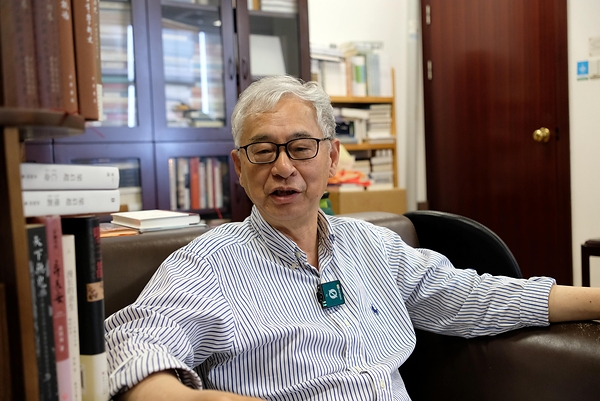
2026 Tang Prize in Sinology Awarded to Ge Zhaoguang
Professor Ge's scholarship spans a wide range of fields, including the history of Chinese thought, religion, literature, and classical philology. He is especially renowned for his work in the history of thought, with An Intellectual History of China being the defining achievement of the first half of his academic career. In this work, Professor Ge argued that intellectual history should shift its focus from the "center" to the "margins," from the "classics" to the "ordinary," and from "elite thought" to the ideas and lived mental worlds of common people, thus opening new possibilities for dialogue between intellectual history, cultural history, and social history.
In recent years, Professor Ge has devoted considerable effort to exploring historical discourses on "China." He has successively published a trilogy of studies on "China," including Here in 'China' I Dwell: Reconstructing Historical Discourses of China for Our Time, What is China? Territory, Ethnicity, Culture, and History, and Lishi Zhongguo De Nei Yu Wai: Youguan "Zhongguo" Yu "Zhoubian" Gainian De Zaichengqing [The Inside and Outside of Historical China: A Reclarification of the Concept of "China" and its "Borders"]. Drawing extensively on traditional textual and visual materials, as well as Sinitic records of the diplomatic journey to China from Joseon, Vietnam, and other neighboring states, he examines China's complex relations with the surrounding regions through perspectives from beyond its borders, inviting renewed reflection on the relationship between "historical China" and "contemporary China." This approach has shaped new directions in historical research over the past decade and more.
Professor Ge has also conducted extensive research on Buddhism, Daoism, and Chinese popular religion, while devoting long-standing attention to Chinese literature. Refusing to be confined by modern Western disciplinary divisions, he founded the National Institute for Advanced Humanistic Studies at Fudan University, where he has worked to promote exchange across traditional fields such as literature, history, philosophy, religion, and art. With his works having been widely translated into English, Japanese, Korean, German, and French, he has reshaped international understanding of Chinese thought and culture.
About the Tang Prize
Since the advent of globalization, humanity has enjoyed unprecedented benefits from advances in civilization and science. Yet a multitude of challenges, such as climate change, the emergence of new infectious diseases, the widening wealth gap, and moral degradation, have surfaced along the way. Against this backdrop, Dr. Samuel Yin established the Tang Prize in December 2012. It consists of four award categories: Sustainable Development, Biopharmaceutical Science, Sinology, and Rule of Law. Every two years, four independent and professional selection committees, comprising many internationally renowned experts, scholars, and Nobel laureates, choose Tang Prize laureates who have made substantive contributions and generated a far-reaching impact on the world, regardless of race, nationality, gender, or religion. A cash prize of NT$50 million (approximately US$1.6 million) is allocated to each category, with NT$10 million (approximately US$320,000) of it being a grant intended for research or educational outreach programs to encourage professionals in every field to examine mankind's most urgent needs in the 21st century, and become leading forces in the sustainable development of human society through their outstanding research outcomes and active civic engagement.
Source: The Tang Prize Foundation