China National Silk Museum Opens Major Song Dynasty Exhibition Reconstructing Lives Through Rare Garments
HANGZHOU, China, March 30, 2026 /PRNewswire/ -- On the afternoon of March 27, a major exhibition exploring daily life and dress in China's Southern Song Dynasty (1127—1279) opened at the China National Silk Museum, Hangzhou. Titled Unveiling the Wardrobe of the Southern Song Dynasty, the exhibition brings together rare textiles and artifacts to reconstruct the lives of two historical figures. Co-organized by the Fujian Museum, Huangyan District Museum, and China National Silk Museum, the exhibition is structured in three sections—"Who Are They?", "Their Daily Life", and "Their Attire," and features 83 sets of artifacts from seven museums, including 15 objects classified as first-grade cultural relics.
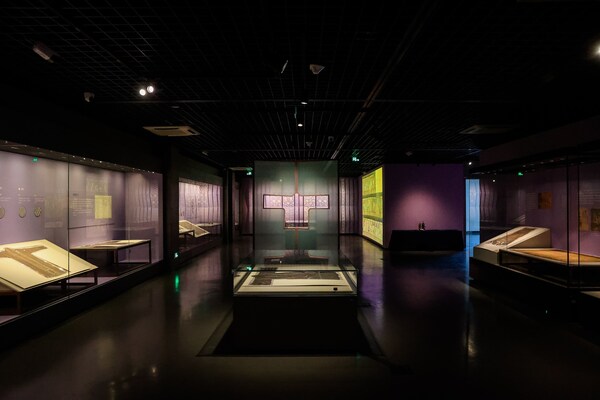
China National Silk Museum Opens Major Song Dynasty Exhibition Reconstructing Lives Through Rare Garments
Among the highlights, several artifacts are on public display for the first time, including a compound incense disk with chi (hornless dragon) motif, a plain wooden tablet used in court ceremonies, a bracelet from the tomb of Zhao Boyun, and a pleated luo silk skirt printed with paired phoenixes and peonies from the tomb of Huang Sheng.
The exhibition centers on two individuals from the Southern Song dynasty—Zhao Boyun, a member of the imperial clan from Zhejiang, and Huang Sheng, a noblewoman from Fujian—whose tombs yielded well-preserved garments and accessories discovered through archaeological excavations. These findings are considered among the most significant Song dynasty textile discoveries. Through silk costumes and everyday items, the exhibition reconstructs their lives, offering insight into social identity, daily practices, and textile production in the Southern Song period, while situating these materials within the broader cultural context of the time.
On the same evening, a cultural event titled A Night of Southern Song Elegance took place. The program brought together scholarly discussion and live performance, with experts sharing perspectives on ceremonial dress, daily life, and textile craftsmanship of the Song dynasty. The event also featured traditional performances, including classical dance, guqin music, and a Song-style tea ceremony, presented alongside academic interpretation.
Two additional exhibitions—Digital Restoration of Song Dynasty Ceremonial Attire and Women's Inner Garments in Ancient China—also opened, further expanding the presentation of Song dynasty dress culture. Together, these exhibitions and immersive nighttime events present a comprehensive view of the period, placing historical materials in dialogue with contemporary methods of interpretation, while continuing to highlight the cultural legacy of silk and its historical connections to the Silk Road.
Source: China National Silk Museum